Azura is proud to have contributed to a new peer-reviewed publication in Diversity and Distributions demonstrating how climate change is reshaping the distribution of whales and dolphins (odontocetes) along the U.S. East Coast.
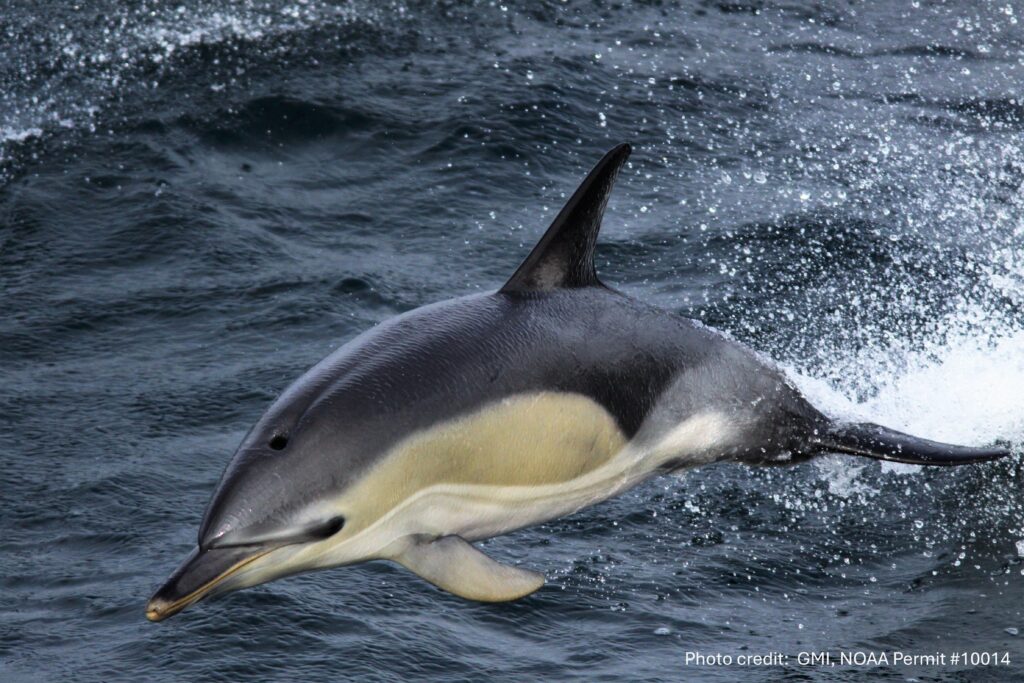
Using nearly 1.4 million kilometers of survey data collected between Florida and Nova Scotia, the study shows that traditional “static” models can miss important trends—while models that account for changing environmental relationships over time reveal clear poleward shifts across multiple species. This work improves our ability to detect and predict climate-driven range changes in marine predators, providing a more powerful framework for ecosystem-based management and conservation in a rapidly changing ocean.
Hirtle, N., J.J. Roberts, J.V. Redfern, E.L. Hazen, D. Palka, W. McLellan, L. Garrison, S. Barco, O. O’Brien, E. Quintana-Rizzo, K. Lomac-MacNair, M. Rickard, A.M. Zoidis, M. Cotter, A.D. Whitt, O. Boisseau, P. Halpin, and L. Thorne. 2026. Models incorporating non-stationarity improve detection of climate-driven range shifts in odontocetes. Diversity and Distributions 32(2):e70154.